
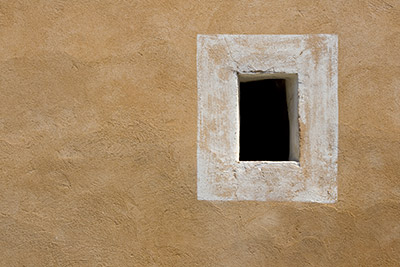
Lime plasters are unique in their instructions for application, and the additional techniques that can be used with them. Cement Stuccos differ in application and are discussed in our Decorative Concrete and Stucco page.
Coloring Lime Plasters and Renders with Pigments
This amount of Ocher or pigment must be kept within these ratios:
- Ochers and Natural Pigments: 3% to 20% of the weight of the dry lime
- Manufactured Oxide Pigments: 3% to 15% of the weight of the dry lime
If using lime putty rather than hydrated lime powder, calculate that approximately 1/3 of that putty's volume is water. Therefore safely calculate the weight of water in one gallon of lime putty will be around 3 lbs, and the remaining weight will be lime. It is this remaining weight that you will base your calculation on. If using a readymade bagged dry lime plaster that already contains aggregate, calculate 25% of the weight of that mix as your lime binder and that will be the weight you calculate your amount of Ocher or pigment to.
Creating Samples: It cannot be stressed enough the need to do sample testing for your colors. It is important to:
- Establish proper ratios
- Determine the final color when actually dry
- See the sample in different light
For batch-to-batch consistency, ratios should always be determined by weight rather than volume as pigment is like flour and the weight of any volume measurement can differ. It is also important to make sure that a sample has completely dried to see the truest color. After adequate drying time, test for any moisture in the sample by holding your hand or cheek against it. Moisture will feel cool to the touch. If a small sample board is created, move it around to different locations to see how the color looks in different light. It may look different in one room from another. Part of the beauty of Ocher or pigment in a lime plaster is how it appears with changing light.
Adding Pigment to the Mix: To mix, slake the pigment in an equal volume of water and work to create a homogenous paste. This can then be added to the wet plaster mix. The use of a mixing paddle attachment is recommended. When adding pigment color to plaster, it should be considered as a powdered aggregate. Therefore it may be necessary to adjust the water to your mix, particularly when using Ochers. Rather than adding additional water, it may be sufficient just to thoroughly saturate the substrate before application of the plaster, and if necessary, light misting of the plaster with water while it is being worked. Follow the proper application instructions for your product and type of mix.
The enhancement of Color in Lime Plasters
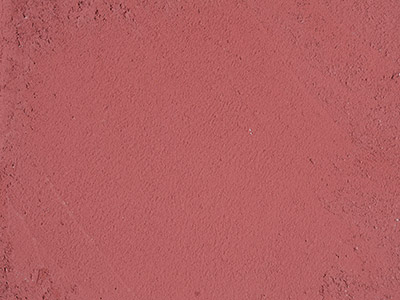
tint
darker than Natural Earths and Ochers.
Proper Atmospheric Conditions for Application of Lime Renders
Proper temperature and humidity are required for the carbonation process to be successful.
- Temperature should not be below 41 ºF (46 ºF for dark colors) at any time during the application or carbonation process. Do not allow freezing to occur.
- In temperatures above 86 ºF or in very low humidity, surface and subsequent coatings must be misted with water. Exterior coatings should be protected from wind and sun to protect from drying too quickly. An opaque covering such as damp canvas or burlap works particularly well.
- Surfaces must not have a surface temperature below 41 ºF (46 ºF for dark colors) and must not be excessively hot or excessively wet.
- The most critical period of carbonation is the first two to three days.
Related How-To's
Fresco & Patina Application for Lime Plasters
Efflorescence in Colored Concrete and Stucco
Pigmented Waxes
Lime Wash